


Get 100% Real AZ-400 Exam Questions, Accurate & Verified Answers As Seen in the Real Exam!
AZ-400 Premium Files Updated Jun-2026 Practice Valid Exam Dumps Question
The Microsoft AZ-400 exam consists of 40-60 multiple-choice questions with a time limit of 150 minutes. To qualify for AZ-400 exam, candidates should have a good understanding of automation techniques and tools, knowledge of Azure and other Microsoft technologies used in the DevOps pipeline, and hands-on experience with Agile methodologies. Passing this certification exam demonstrates that an individual has the skills and knowledge necessary to design and implement DevOps practices using Microsoft technologies.
Microsoft AZ-400: Designing and Implementing Microsoft DevOps Solutions is a certification exam designed for IT professionals and developers who want to demonstrate their expertise in implementing DevOps principles and practices using Microsoft technologies. AZ-400 exam is ideal for those who are responsible for designing, implementing, and managing DevOps workflows and solutions in their organizations.
NEW QUESTION # 164
Note: This question is part of a series of questions that present the same scenario. Each question in the series contains a unit solution that might meet the stated goals. Some question sets might have more than one correct solution, while others might not have a correct solution.
After you answer a question in this section, you will NOT be able to return to it. As a result, these questions will not appear if the review screen.
You use an Azure Pipelines pipeline to build and release web apps.
You need to configure the pipeline to meet the following requirements:
* Only run when there is a change in the /webapp folder.
* Only run when a pr is created.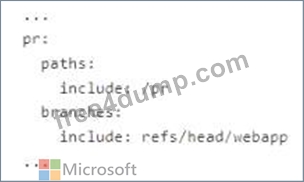
.
Solution: You configure the pipeline definition by using the following elements.
Does this meet the goal?
- A. Yes
- B. No
Answer: B
NEW QUESTION # 165
You currently use JIRA, Jenkins, and Octopus as part of your DevOps processes.
You plan to use Azure DevOps to replace these tools.
Which Azure DevOps service should you use to replace each tool? To answer, select the appropriate options in the answer area.
NOTE: Each correct selection is worth one point.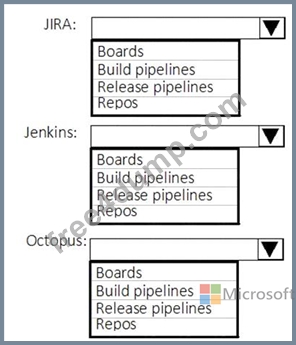
Answer:
Explanation: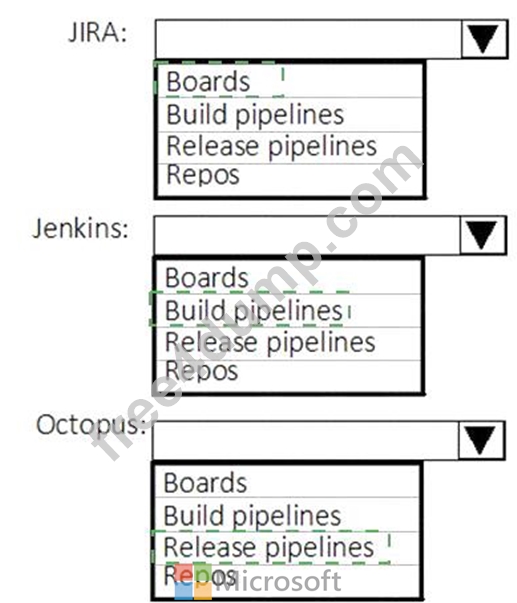
Explanation:
JIRA- BoardJenkins- Build PipelinesOctopus- Release pipelines
NEW QUESTION # 166
You need to configure Azure Automation for the computer in Group7.
Which three actions should you perform in sequence? To answer, move the appropriate actions from the list of actions to the answer area and arrange them in the correct order.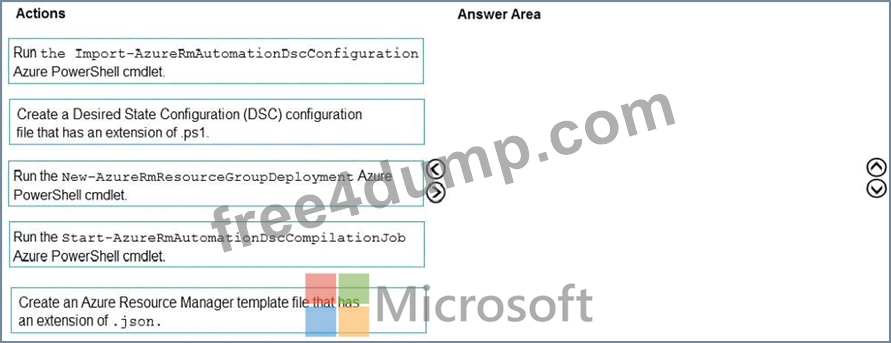
Answer:
Explanation: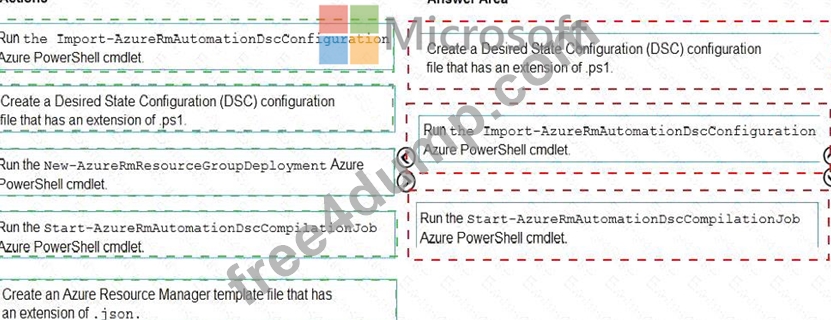
Explanation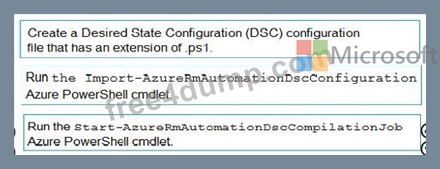
Step 1: Create a Desired State Configuration (DSC) configuration file that has an extension of .ps1.
Step 2: Run the Import-AzureRmAutomationDscConfiguration Azure Powershell cmdlet The Import-AzureRmAutomationDscConfiguration cmdlet imports an APS Desired State Configuration (DSC) configuration into Azure Automation. Specify the path of an APS script that contains a single DSC configuration.
Example:
PS C:\>Import-AzureRmAutomationDscConfiguration -AutomationAccountName
"Contoso17"-ResourceGroupName "ResourceGroup01" -SourcePath "C:\DSC\client.ps1" -Force This command imports the DSC configuration in the file named client.ps1 into the Automation account named Contoso17. The command specifies the Force parameter. If there is an existing DSC configuration, this command replaces it.
Step 3: Run the Start-AzureRmAutomationDscCompilationJob Azure Powershell cmdlet The Start-AzureRmAutomationDscCompilationJob cmdlet compiles an APS Desired State Configuration (DSC) configuration in Azure Automation.
References:
https://docs.microsoft.com/en-us/powershell/module/azurerm.automation/import-azurermautomationdscconfigur
https://docs.microsoft.com/en-us/powershell/module/azurerm.automation/start-azurermautomationdsccompilatio
NEW QUESTION # 167
Your company is creating a suite of three mobile applications.
You need to control access to the application builds. The solution must be managed at the organization level What should you use? To answer, select the appropriate options m the answer area.
NOTE: Each correct selection is worth one point.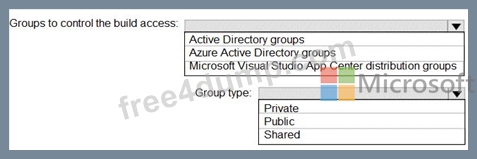
Answer:
Explanation: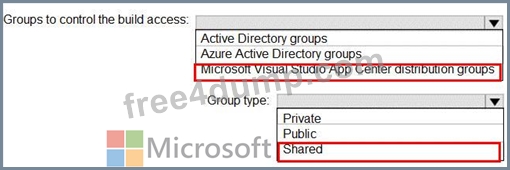
NEW QUESTION # 168
You have a project in Azure DevOps that uses packages from multiple public feeds. Some of the feeds are unreliable.
You need to consolidate the packages into a single feed.
Which three actions should you perform in sequence? To answer, move the appropriate actions from the list of actions to the answer area and arrange them in the correct order.
Answer:
Explanation: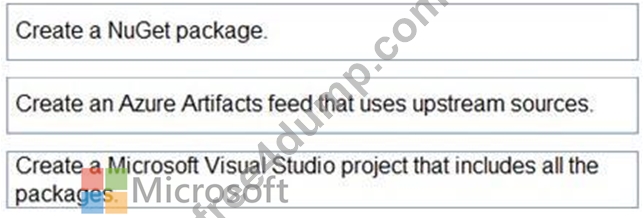
Step 1: Create a NuGet package.
NuGet and Maven are public package managers that support multiple feeds.
Step 2: Create an Azure Artifacts feed that uses upstream sources
If you want to use packages from multiple feeds, use upstream sources to bring packages from multiple feeds together into a single feed.
Step 3: Create a Micrtosoft Visual Studio project that includes all the packages Consume NuGet packages from upstream sources: Now you can open Visual Studio and install packages from the upstream sources you just configured.
Reference:
https://docs.microsoft.com/en-us/azure/devops/artifacts/how-to/set-up-upstream-sources
NEW QUESTION # 169
You manage build and release pipelines by using Azure DevOps. Your entire managed environment resides in Azure.
You need to configure a service endpoint for accessing Azure Key Vault secrets. The solution must meet the following requirements:
Ensure that the secrets are retrieved by Azure DevOps.
Avoid persisting credentials and tokens in Azure DevOps.
How should you configure the service endpoint? To answer, select the appropriate options in the answer area.
NOTE: Each correct selection is worth one point.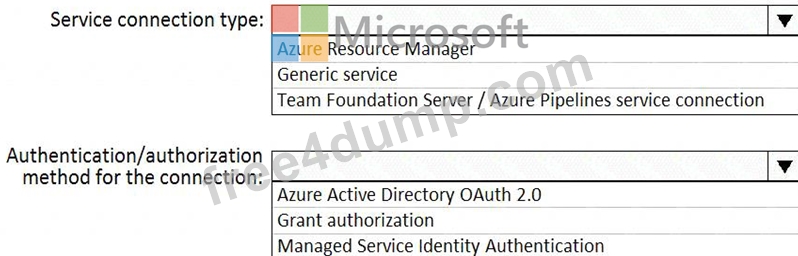
Answer:
Explanation: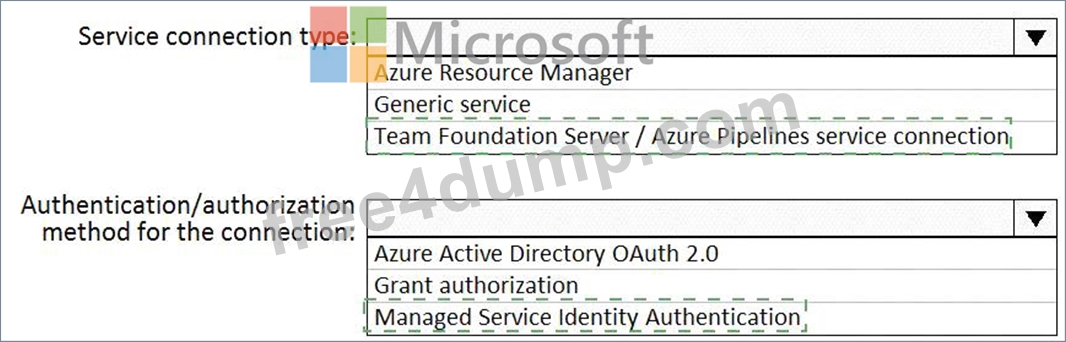
Explanation: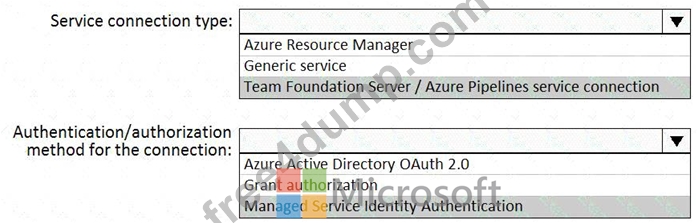
Box 1: Azure Pipelines service connection
Box 2: Managed Service Identity Authentication
The managed identities for Azure resources feature in Azure Active Directory (Azure AD) provides Azure services with an automatically managed identity in Azure AD. You can use the identity to authenticate to any service that supports Azure AD authentication, including Key Vault, without any credentials in your code.
Reference:
https://docs.microsoft.com/en-us/azure/devops/pipelines/tasks/deploy/azure-key-vault
https://docs.microsoft.com/en-us/azure/active-directory/managed-identities-azure-resources/overview
NEW QUESTION # 170
A team is currently using a project in Azure Devops. The team needs to have a policy in place that ensures the following:
- A user should be able to merge to a master branch even if the code
fails to compile.
The solution must use the principle of least privilege.
Which of the following would you implement?
- A. Ensure to modify the access control for the user from the security setting of the repository
- B. Ensure to modify the access control for the user from the security setting of the branch
- C. Ensure that the user is added to the Project Administrators group
- D. Ensure that the user is added to the Build Administrators group
Answer: B
Explanation:
https://docs.microsoft.com/en-us/azure/devops/repos/git/branch-permissions?view=azure-devops
NEW QUESTION # 171
Note: This question is part of a series of questions that present the same scenario. Each question in the series contains a unique solution that might meet the stated goals. Some question sets might have more than one correct solution, while others might not have a correct solution.
After you answer a question in this section, you will NOT be able to return to it. As a result, these questions will not appear in the review screen.
You plan to update the Azure DevOps strategy of your company.
You need to identify the following issues as they occur during the company's development process:
* Licensing violations
* Prohibited libraries
Solution: You implement automated security testing.
Does this meet the goal?
- A. Yes
- B. No
Answer: B
Explanation:
Instead use implement continuous integration.
Note: WhiteSource is the leader in continuous open source software security and compliance management. WhiteSource integrates into your build process, irrespective of your programming languages, build tools, or development environments. It works automatically, continuously, and silently in the background, checking the security, licensing, and quality of your open source components against WhiteSource constantly-updated definitive database of open source repositories.
Reference:
https://azuredevopslabs.com/labs/vstsextend/whitesource/
NEW QUESTION # 172
You use Azure Pipelines to automate Continuous Integration/Continuous Deployment (CI/CD) for an Azure web app named WebApp1.
You configure an Azure Monitor alert that is triggered when WebApp1 generates an error.
You need to configure the alert to forward details of the error to a third-party system. The solution must minimize administrative effort.
Which three actions should you perform in sequence? To answer, move the appropriate actions from the list of actions to the answer area and arrange them in the correct order.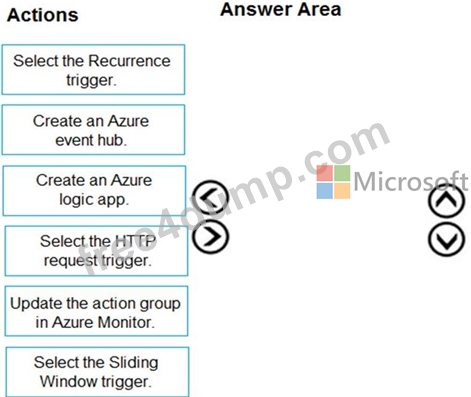
Answer:
Explanation: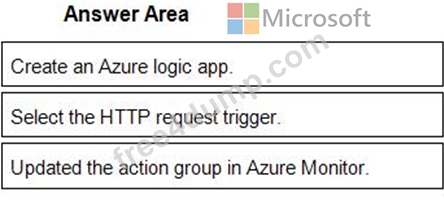
1 - Create an Azure logic app.
2 - Select the HTTP request trigger.
3 - Updated the action group in Azure Monitor.
Reference:
https://docs.microsoft.com/en-us/azure/azure-monitor/alerts/action-groups-logic-app
NEW QUESTION # 173
You need to configure Azure Automation for the computer in Group7.
Which three actions should you perform in sequence? To answer, move the appropriate actions from the list of actions to the answer area and arrange them in the correct order.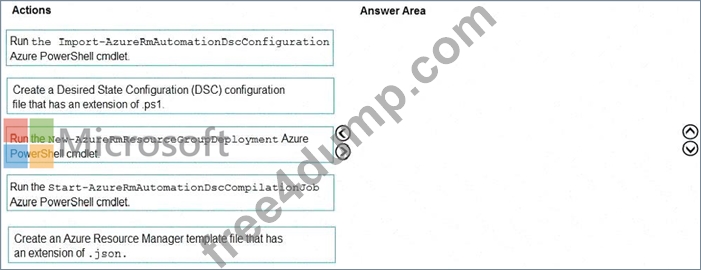
Answer:
Explanation: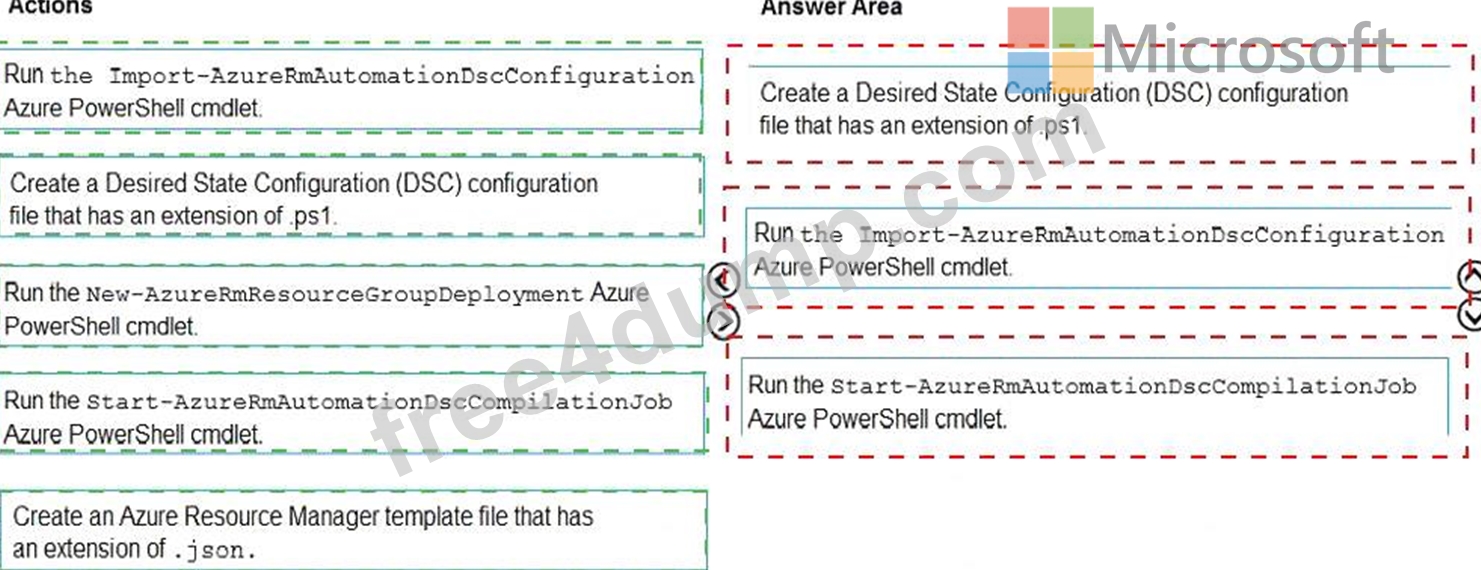
Explanation: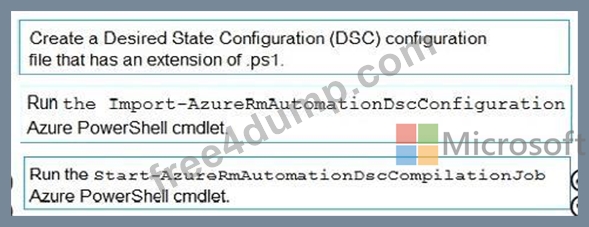
Step 1: Create a Desired State Configuration (DSC) configuration file that has an extension of .ps1.
Step 2: Run the Import-AzureRmAutomationDscConfiguration Azure Powershell cmdlet TheImport-AzureRmAutomationDscConfiguration cmdlet imports an APS Desired State Configuration (DSC) configuration into Azure Automation. Specify the path of an APS script that contains a single DSC configuration.
Example:
PS C:\>Import-AzureRmAutomationDscConfiguration -AutomationAccountName "Contoso17"- ResourceGroupName "ResourceGroup01" -SourcePath "C:\DSC\client.ps1" -Force This command imports the DSC configuration in the file named client.ps1 into the Automation account named Contoso17. The command specifies the Force parameter. If there is an existing DSC configuration, this command replaces it.
Step 3: Run the Start-AzureRmAutomationDscCompilationJob Azure Powershell cmdlet The Start-AzureRmAutomationDscCompilationJob cmdlet compiles an APS Desired State Configuration (DSC) configuration in Azure Automation.
References:
https://docs.microsoft.com/en-us/powershell/module/azurerm.automation/import- azurermautomationdscconfiguration
https://docs.microsoft.com/en-us/powershell/module/azurerm.automation/start- azurermautomationdsccompilationjob
NEW QUESTION # 174
You have a project Azure DevOps.
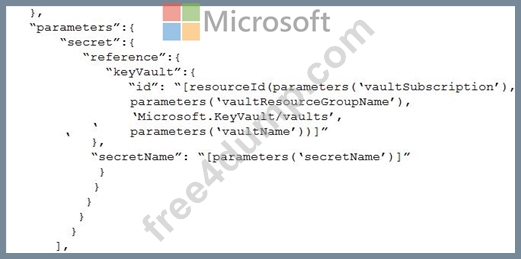
You plan to create a build pipeline that will deploy resources by using Azure Resource Manager templates. The templates will reference secretes stored in Azure Key Vault.
You need to ensure that you can dynamically generate the resource ID of the key vault during template deployment.
What should you include in the template? To answer, select eh appropriate options in the answer area.
NOTE: Each correct selection is worth one point.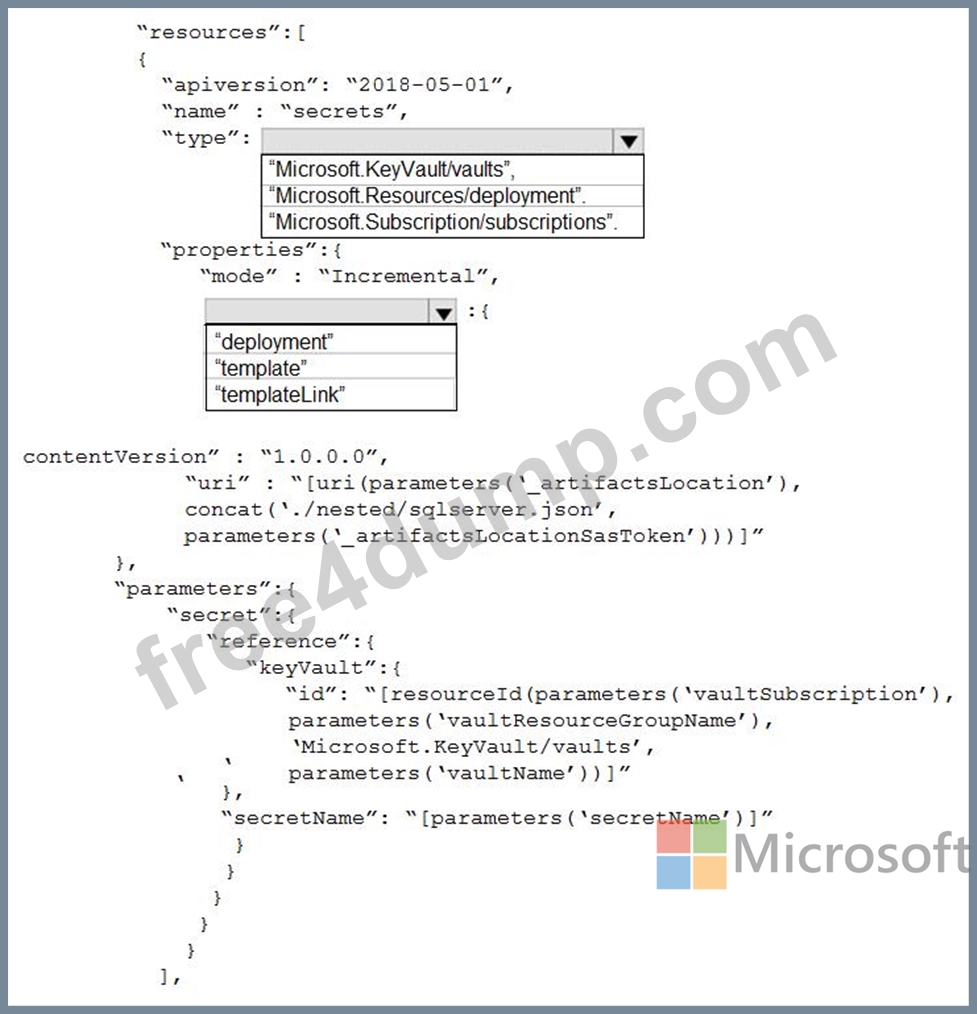
Answer:
Explanation: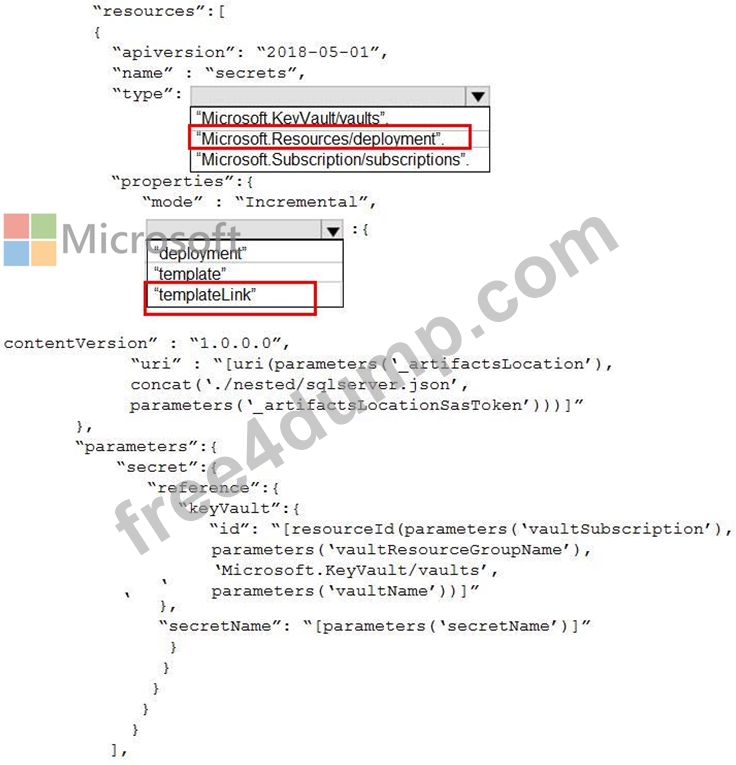
NEW QUESTION # 175
Your company uses GitHub for source control. GitHub repositories store source code and store process documentation. The process documentation is saved as Microsoft Word documents that contain simple flow charts stored as .bmp files.
You need to optimize the integration and versioning of the process documentation and the flow charts. The solution must meet the following requirements:
* Store documents as plain text.
* Minimize the number of files that must be maintained.
* Simplify the modification, merging, and reuse of flow charts.
* Simplify the modification, merging, and reuse of documents.
What should you include in the solution? To answer, select the appropriate options in the answer area. NOTE:
Each correct selection is worth one point.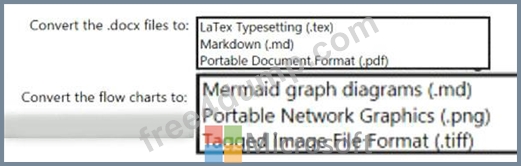
Answer:
Explanation: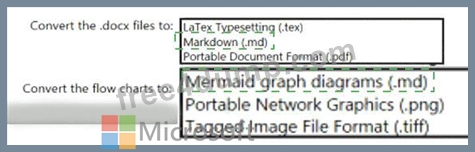
NEW QUESTION # 176
You have an Azure Repos repository named repo1.
You need to clone repo1. The solution must clone only a directory named src/web.
How should you complete the script? To answer, drag the appropriate values to the correct targets,Each value may be used once, more than once, or not at all. You may need to drag the spirt bar between panes or scroll to view content.
NOTE: Each correct selection is worth one point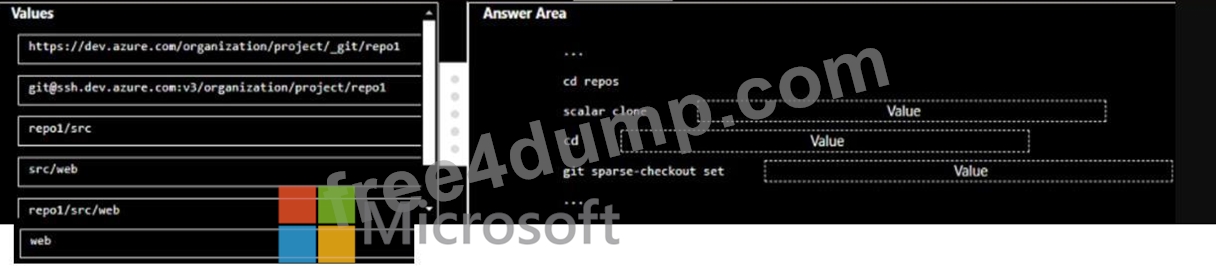
Answer:
Explanation: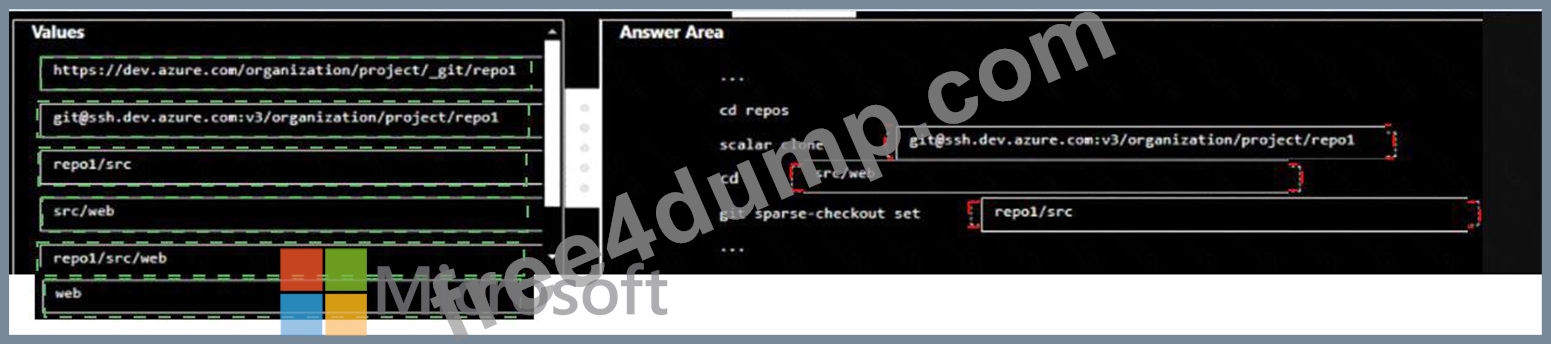
Explanation
Text Description automatically generated with medium confidence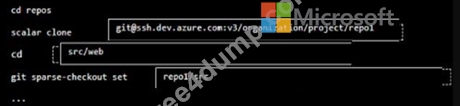
NEW QUESTION # 177
You manage a website that uses an Azure SQL Database named db1 in a resource group named RG1lod11566895.
You need to modify the SQL database to protect against SQL injection.
To complete this task, sign in to the Microsoft Azure portal.
Answer:
Explanation:
See solution below.
Explanation:
Set up Advanced Threat Protection in the Azure portal
1. Sign into the Azure portal.
2. Navigate to the configuration page of the server you want to protect. In the security settings, select Advanced Data Security.
3. On the Advanced Data Security configuration page: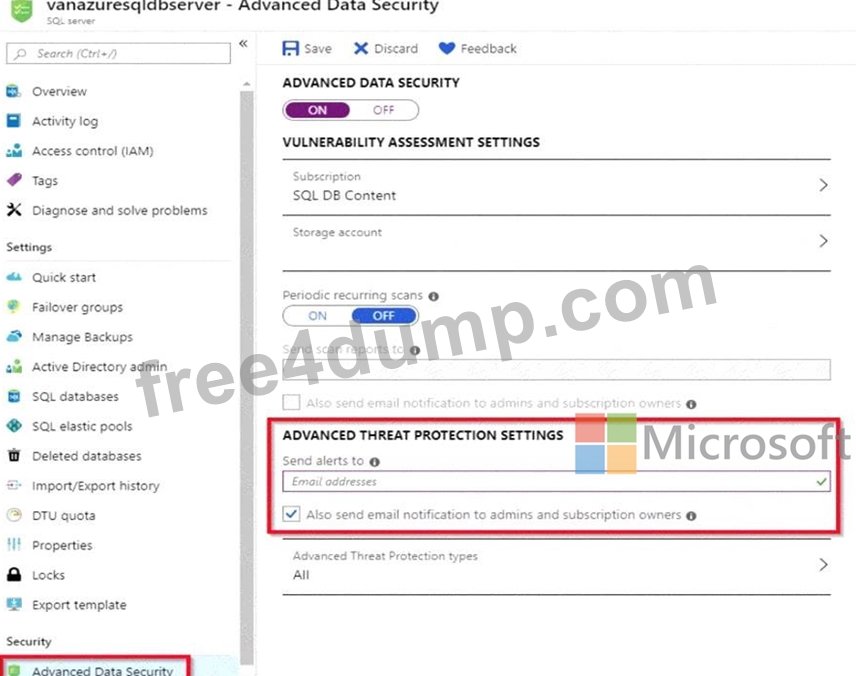
4. Enable Advanced Data Security on the server.
Note: Advanced Threat Protection for Azure SQL Database detects anomalous activities indicating unusual and potentially harmful attempts to access or exploit databases. Advanced Threat Protection can identify Potential SQL injection, Access from unusual location or data center, Access from unfamiliar principal or potentially harmful application, and Brute force SQL credentials Reference:
https://docs.microsoft.com/en-us/azure/storage/common/storage-account-create
https://docs.microsoft.com/en-us/azure/azure-sql/database/threat-detection-configure
NEW QUESTION # 178
Hotspot Question
You have an Azure DevOps project that is used to build an app named App1.
You need to recommend a release strategy for App1. The solution must meet the following requirements:
- Detect if App cannot respond to customer requests for more than 30
seconds.
- Ensure that App1 can respond to at least 100 concurrent users while
maintaining page load times of less than 10 seconds.
Which type of test should you recommend for each requirement? To answer, select the appropriate options in the answer area.
NOTE: Each correct selection is worth one point.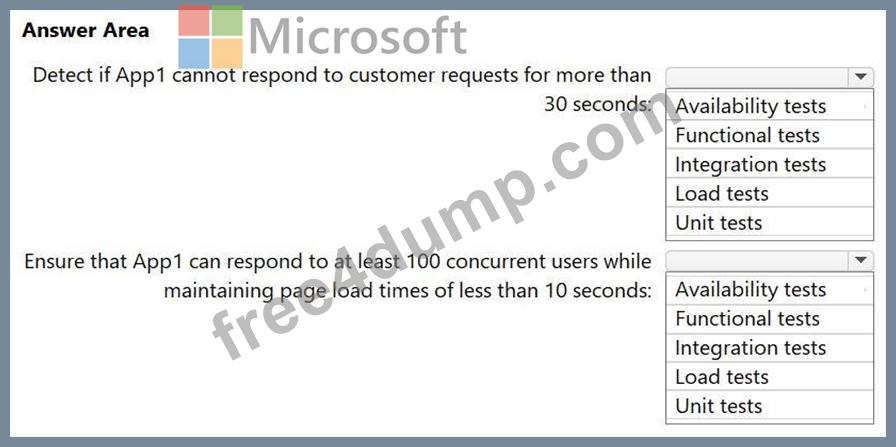
Answer:
Explanation: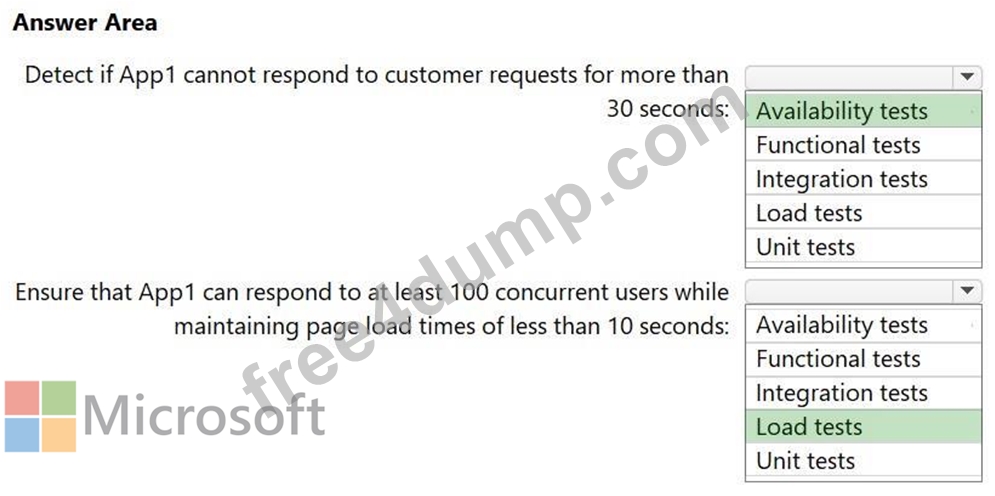
Explanation:
Box 1: Availability tests
Detect if App cannot respond to customer requests for more than 30 seconds.
Application Insights enables you to set up recurring web tests that monitor your website or application's availability and responsiveness from various points around the world. These availability tests send web requests to your application at regular intervals and alert you if your application isn't responding or if the response time is too slow.
Box 2: Load tests
Ensure that App1 can respond to at least 100 concurrent users while maintaining page load times of less than 10 seconds.
Azure Load Testing allows you to find bottlenecks within your application stack, load testing your applications, and includes reporting on your tests, allowing you find any performance regressions or issues.
Reference:
https://learn.microsoft.com/en-us/azure/azure-monitor/app/availability
https://devblogs.microsoft.com/devops/integrate-azure-load-testing-into-azure-devops/
NEW QUESTION # 179
SIMULATION
You need to configure a virtual machine named VM1 to securely access stored secrets in an Azure Key Vault named az400-11566895-kv.
To complete this task, sign in to the Microsoft Azure portal.
Answer:
Explanation:
You can use a system-assigned managed identity for a Windows virtual machine (VM) to access Azure Key Vault.
10.Sign in to Azure portal
11.Locate virtual machine VM1.
12.Select Identity
13.Enable the system-assigned identity for VM1 by setting the Status to On.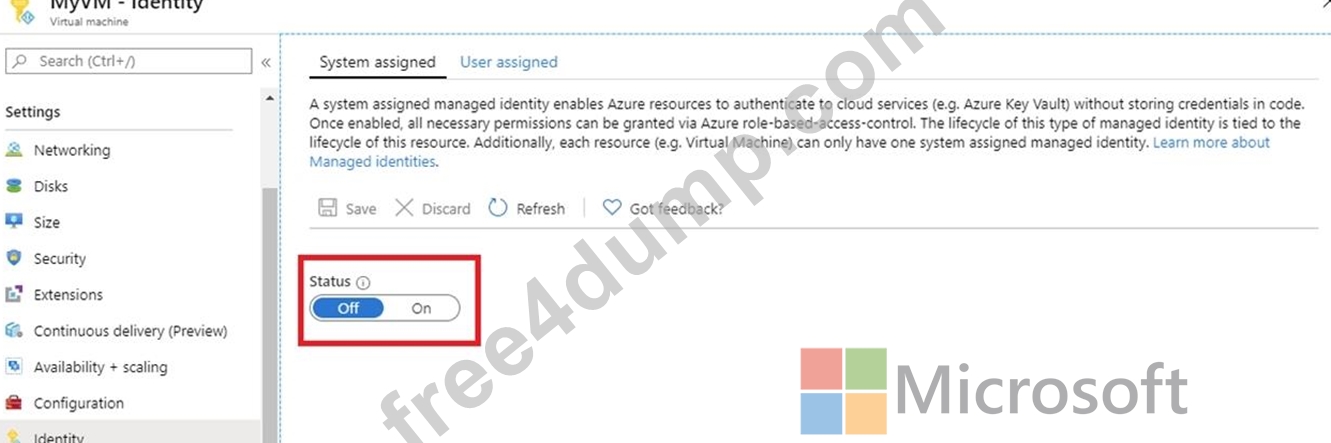
Note: Enabling a system-assigned managed identity is a one-click experience. You can either enable it during the creation of a VM or in the properties of an existing VM.
Reference:
https://docs.microsoft.com/en-us/azure/active-directory/managed-identities-azure- resources/tutorial-windows-vm-access-nonaad
NEW QUESTION # 180
......
Key Exam Details
Before you take Microsoft AZ-400, the very first thing that you need to know is that the duration of this exam is 150 minutes. Each candidate will have to answer 40 to 60 questions within this period, so it is important to make sure that you keep track of time. The minimum passing score for this test is 700 out of 1000. The exam voucher costs $165 and the registration process should be done via the Pearson VUE platform. You can take this certification test in the Korean, Simplified Chinese, Japanese, or English languages.
REAL AZ-400 Exam Questions With 100% Refund Guarantee : https://surepass.free4dump.com/AZ-400-real-dump.html