

VMware 2V0-642日本語 real dump : VMware Certified Professional 6 - Network Virtualization 6.2 Exam (2V0-642日本語版)

- Exam Code: 2V0-642J
- Exam Name: VMware Certified Professional 6 - Network Virtualization 6.2 Exam (2V0-642日本語版)
- Updated: Jul 18, 2026
- Q&As: 121 Questions and Answers
About VMware 2V0-642日本語 real dump
Confirmed products
Confronted with miscellaneous practice materials in the market, we can help you out with the best 2V0-642日本語 quiz guide materials. Allowing for this is your first time of choosing the 2V0-642日本語 guide torrent materials, so we want to give you more details of our products. our 2V0-642日本語 sure-pass study materials have an dominant place in the market for passing rate of former customers who chose our 2V0-642日本語 pass-sure torrent files have reached up to 98 to 100 percent. So our 2V0-642日本語 exam braindumps can help you stick out the average once you compete with others in the same situation for their professional team consisted of professional experts and elites in this area. Our experts are quite arduous to do their job to help you out with the most useful 2V0-642日本語 pass-sure materials with quality and accuracy. It is definitely a meaningful investment for you and you cannot miss this opportunity to being outstanding.
Time tested products
Just like a paragon in practice material market, our 2V0-642日本語 quiz guide materials are being perfect all these years going through the trial of time and market, even get the praise from competitors. You do not need to be equivocal about our 2V0-642日本語 guide torrent materials. With free domo for your reference, you can download them before purchase, which will be potent reference. To reward your support all these years, we will send some benefits of 2V0-642日本語 sure-pass study materials such as discount at intervals and new revivals to your mailbox once our experts make any, just be prepared for the exam, we will help you. After getting our VMware 2V0-642日本語 quiz guide materials you can speed up your pace of practice with stalwart principles. Why are you waiting now?
After purchase, Instant Download: Upon successful payment, Our systems will automatically send the product you have purchased to your mailbox by email. (If not received within 12 hours, please contact us. Note: don't forget to check your spam.)
VMware VCP-NV 2020 Exam Syllabus Topics:
| Section | Objectives |
|---|---|
Section 1: Understand VMware NSX Technology and Architecture | |
| Compare and Contrast the Benefits of a VMware NSX Implementation | -Determine challenges with physical network implementations -Understand common VMware NSX terms -Differentiate NSX network and security functions and services -Differentiate common use cases for VMware NSX |
| Understand VMware NSX Architecture | -Differentiate component functionality of NSX stack infrastructure components - Compare and contrast with advantages/disadvantages of topologies (star, ring, etc.) as well as scaling limitations -Compare and contrast VMware NSX data center deployment models -Prepare a vSphere implementation for NSX |
| Prepare a vSphere implementation for NSX | - Differentiate logical and physical topologies, components and services -Differentiate logical and physical security constructs
|
| Understand VMware NSX Integration with Third-Party Products and Services | -Understand integration with third-party partner tools and systems using NSX REST APIs -Determine integration with third-party services
-Determine integration with third-party hardware
-Install/register a third-party service with NSX |
| Understand VMware NSX Integration with vRealize Automation (vRA) | -Understand integration with vRealize Automation -Demonstrate NSX deployment capabilities built into vRealize Automation -Compare and contrast Network Profiles available in vRealize Automation -Understand NSX preparation tasks for attaching a network profile to a blueprint - Discern vRealize Automation preparation tasks for deploying a machine with on-demand network services |
Section 2: Understand VMware NSX Physical Infrastructure Requirements | |
| Compare and Contrast the Benefits of Running VMware NSX on Physical Network Fabrics | -Differentiate physical network topologies
-Differentiate virtual network topologies
-Given a specific physical topology, determine what challenges could be addressed by aVMware NSX implementation. |
| Determine Physical Infrastructure Requirements for a VMware NSX Implementation | -Discern management and edge cluster requirementsDifferentiateminimum/optimalphysicalinfrastructurerequirementsfora VMwareNSX implementation -Determine how traffic types are handled in a physical infrastructure -Determine use cases for available virtual architectures -Describe ESXi host vmnic requirements -Differentiate virtual to physical switch connection methods -Compare and contrast VMkernel networking scenarios |
Section 3: Configure and Manage vSphere Networking | |
| Configure and Manage vSphere Distributed Switches (vDS) | -Compare and contrast vDS capabilities -Create/Delete a vDS -Add/Remove ESXi hosts from a vDS -Edit general vSphere vDS settings -Add/Configure/Remove dvPortgroups - Configure dvPort settings -Add/Remove uplink adapters to dvUplinkgroups -Create/Configure/Remove virtual adapters -Migrate virtual machines to/from a vDS -Monitor dvPort state -Determine use cases for a vDS |
| Configure and Manage vDS Policies | -Compare and contrast common vDS policies -Configure dvPortgroup blocking policies -Explain benefits of Multi-Instance TCP/IP stack -Configure load balancing and failover policies -Configure VLAN settings -Configure traffic shaping policies -Enable TCP Segmentation Offload (TOE) support for a virtual machine -Enable Jumbo Frame support on appropriate components -Determine appropriate VLAN configuration for a vSphere implementation -Understand how DSCP is handled in a VXLAN frame |
Section 4: Install and Upgrade VMware NSX | |
| Configure Environment for Network Virtualization | - Comprehend physical infrastructure configuration for NSX Compute, Edge and Management clusters (MTU, Dynamic Routing for Edge, etc.) -Prepare a Greenfield vSphere Infrastructure for NSX Deployment
-Configure a Brownfield vSphere Infrastructure for NSX |
| Deploy VMware NSX Components | -Install/Register NSX Manager -Prepare ESXi hosts -Deploy NSX Controllers -Understand assignment of Segment ID Pool and appropriate need for Multicast addresses -Install Guest Introspection -Create an IP pool -Understand when to use IP Pools versus DHCP for VTEP configuration |
| Upgrade Existing vCNS/NSX Implementation | - Based on a given upgrade scenario, identify requisite steps and components for upgrading to NSX 6.x -Upgrade vCNS 5.5 to NSX 6.x -Upgrade vCNS Virtual Wires to NSX Logical Switches -Upgrade to NSX Components
-Upgrade NSX Manager from 6.0 to 6.x |
| Expand Transport Zone to Include New Cluster(s) | -Understand the function of a Transport Zone -Understand proper addition of a Transport Zone -Understand necessity to expand or contract a Transport Zone -Edit a Transport Zone -Understand appropriate use of Control Plane mode modification of a Transport zone |
Section 5: Configure VMware NSX Virtual Networks | |
| Create and Administer Logical Switches | -Given a scenario, demonstrate the proper way to add/remove a Logical Switch -Determine use case for and contrast the three Control Plane Modes
-Deploy services to a Logical Switch |
| Configure VXLAN | -Determine areas where VXLANs should be configured -Understand physical network requirements for virtual topologies with VXLANs -Understand how to prepare a vSphere cluster for VXLAN -Determine the appropriate teaming policy for a given implementation -Understand how to configure and modify the options of a Transport Zone -Understand how prepare VXLAN Tunnel End Points (VTEPs) on vSphere clusters |
| Configure and Manage Layer 2 Bridging | -Given a scenario, determine an appropriate High Availability configuration for Layer 2 Bridging -Understand how to add a Layer 2 Bridge to an NSX Edge device -Determine when Layer 2 Bridging would be required for a given NSX implementation -Determine use cases for multiple Layer 2 Bridges -Compare and contrast software and hardware bridging |
| Configure and Manage Logical Routers | -Install NSX Edge -Understand how to connect/disconnect a Logical Switch from a logical router -Understand and describe the different types of router interfaces -Determine NSX components needed to build out topologies with logical routers -Understand how to add and configure a new logical router -Determine use case for and configure a management interface -Determine use case for and configure High Availability for a logical router -Configure routing protocols
-Configure default gateway |
Section 6: Configure and Manage NSX Network Services | |
| Configure and Manage Logical Load Balancing | -Differentiate when to use the two topologies for load balancing -Understand how to configure load balancing -Configure and understand service monitors -Understand how to Add/Edit/Delete a server pool -Understand how to Add/Edit/Delete an application profile -Understand how to Add/Edit/Delete virtual servers -Determine appropriate NSX Edge instance size based on load balancing requirements |
| Configure and Manage Logical Virtual Private Networks (VPN) | -Understand how to configure IPSec VPN
-Understand how to configure Layer 2 VPN
-Configure Network Access/Web Access SSL VPN-Plus
-Determine appropriate VPN service type for a given NSX implementation |
| Configure and Manage DHCP/DNS/NAT | -Understand proper use and addition of a DHCP IP Pool -Enable a DHCP IP pool -Determine use and proper implementation of DNS services -Determine when and how to configure Source NAT -Determine when and how to configure Destination NAT -Given a scenario, compare and contrast proper DHCP uses |
| Configure and Manage Edge Services High Availability | -Given a scenario, compare and contrast proper HA uses -Determine service availability during an Edge High Availability failover -Differentiate NSX Edge High Availability and vSphere High Availability -Configure NSX Edge High Availability
-Modify and existing Edge High Availability deployment
- Combine ECMP with other stateful services |
Section 7: Configure and Administer Netw Network Security | |
| Configure and Administer Logical Firewall Services | -Add/Edit/Delete an Edge Firewall rule -Configure Source/Destination/Service/Action rule components - Compare and contrast between Edge Rule Types (PreRules/Internal/User Rules/Default Rules) -Change the order of an Edge User Firewall rule -Demonstrate how to configure an Edge Firewall PreRule -Understand the limitations of ECMP and Edge Firewall Policy |
| Configure Distributed Firewall Services | -Understand VM IP Address learning for the purposes of DFW vCenter attribute learning -Differentiate between Layer 2 and Layer 3 rules -Differentiate between entity-based and identity-based rules -Understand firewall rule entities -Determine rule processing order -Understand rule segregation -Demonstrate steps to Add/Delete a Distributed Firewall rule -Demonstrate configuration of Source/Destination/Service/Action rule components -Change the order of a Distributed Firewall rule -Add/Merge/Delete a Distributed Firewall rule section -Determine publishing requirements for rules in a given NSX implementation -Demonstrate Import/Export Distributed Firewall Configuration -Load Distributed Firewall configuration -Determine need for excluding virtual machines from distributed firewall protection -Describe SpoofGuard Operation and Default Policy and Actions -Describe SpoofGuard IP Address Learning -Determine requirements for a Spoofguard Policy -Demonstrate how to Create and Edit a SpoofGuard Policy
|
| Configure and Manage Service Composer | -Understand assets that can be used with a Security Group -Differentiate services contained in a Security Policy -Compare and contrast common Service Composer use cases -Differentiate third party integration and service redirection -Differentiate Security Groups and Security Policies -Demonstrate the ability to redirect specific flows (e.g. 80) to network introspection services - Differentiate between vCenter attribute based Firewall rules (including IP Sets) vs Active Directory identity-based rule -Create/Edit a Security Group in Service Composer -Create/Edit/Delete a Security Policy in Service Composer -Map a Security Policy to a Security Group -Add/Edit/Delete a Security Tag -Assign and view a Security Tag |
Section 8: Deploy a Cross-vCenter NSX environment | |
| Differentiate single and Cross-vCenter NSX deployments | -Understand the benefits/use cases for Cross-vCenter NSX -Contrast single and Cross-vCenter deployment models -Determine the appropriate NSX topology for a given use case -Understand options for ingress and egress traffic flows in a multi-site topology -Describe and differentiate Universal components
|
| Determine Cross-vCenter Requirements and Configurations | -Deploy a Cross-vCenter NSX environment
-Migrate an NSX deployment to Cross-vCenter
-Compare and contrast Local and Universal Firewall Rules |
Section 9: Perform Operations Tasks in a VMware NSX Environment | |
| Configure Roles, Permissions, and Scopes | -Understand default roles -Understand Single Sign-On (SSO) integration -Configure SSO -Assign a role to a vCenter Server user or group -Compare and contrast the uses for the various NSX Security Roles - Determine how roles can be applied to a subset of the vCenter infrastructure for multi Tenancy purposes -Understand how to apply NSX Roles to an AD group -Assign objects to a user -Enable/Disable a user account -Edit/Delete a user account |
| Understand NSX Automation | -Discern common use cases that require the NSX REST API - Compare and contrast how the NSX REST API works and how it is used with a support browser -Understand how NSX REST API Calls are sent to the NSX Manager -Differentiate common NSX REST API verbs -Determine how to use NSX REST API calls to learn the network topology |
| Monitor a VMware NSX Implementation | -Compare and contrast available monitoring methods (UI, CLI, API, etc.) -Monitor infrastructure components
-Perform Inbound/Outbound activity monitoring
|
| Perform Auditing and Compliance | -Given an auditing scenario, determine where applicable log information can be located -Differentiate permissions for auditing -Differentiate common data security regulations supported by NSX Data Security -Differentiate information available in audit logs -Use flow monitoring to audit firewall rules -Audit deleted users -Audit infrastructure changes -View NSX Manager audit logs and change data -Configure NSX Data Security -Create a Data Security Policy -Install Data Security -Run a Data Security scan -View and download compliance reports -Create a regular expression -Configure Guest Introspection (Install vShield Endpoint) |
| Administer Logging | - Given a scenario, utilize information contained in technical support bundles/logs to assist in troubleshooting -Explain usage of CLI for logging -Configure Syslog(s) -Configure logging for Dynamic Routing information -Log Distributed Firewall rule processing information -Log Edge Firewall rule processing information -Log address translation information -Log VPN traffic -Configure basic/advanced Load Balancer logging -Log DHCP assignments -Log DNS resolutions -Log security policy session information -Download NSX Edge tech support logs -Generate NSX Manager tech support logs |
| Backup and Recover Configurations | -Understand how to backup and recover various components -Schedule backups -Export/Restore vSphere Distributed Switch configuration -Import/Export Service Composer profiles -Perform NSX Manager backup and restore operation |
Section 10: Troubleshoot a VMware Network Virtualization Implementation | |
| Compare and Contrast Tools Available for Troubleshooting | -Capture and trace uplink, vmknic, and physical NIC packets -Audit NSX infrastructure changes -Output packet data for use by a protocol analyzer -Capture and analyze traffic flows -Mirror network traffic for analysis -Perform a network health check -Configure vSphere Distributed Switch alarms |
| Troubleshoot Common NSX Installation/Configuration Issues | -Troubleshoot lookup service configuration -Troubleshoot vCenter Server link -Troubleshoot licensing issues -Troubleshoot permissions issues -Troubleshoot host preparation issues -Troubleshoot IP pool issues |
| Troubleshoot Common NSX Component Issues | -Differentiate NSX Edge logging and troubleshooting commands -Verify NSX Controller cluster status and roles -Verify NSX Controller node connectivity -Check NSX Controller API service -Validate VXLAN and Logical Router mapping tables -List Logical Router instances and statistics -Verify Logical Router interface and route mapping tables -Verify active controller connections -View Bridge instances and learned MAC addresses -Display Logical Router instances -Verify NSX Manager services status -View Logical Interfaces and routing tables -Analyze NSX Edge statistics |
| Troubleshoot Common Connectivity Issues | -Review netcpa logs for control plane connectivity issues -Verify VXLAN, VTEP, MAC, and ARP mapping tables -List VNI configuration -View VXLAN connection tables and statistics -Perform VTEP connectivity tests |
| Troubleshoot Common vSphere Networking Issues | -Verify network configuration -Verify a given virtual machine is configured with the correct network resources -Troubleshoot virtual switch and port group configuration issues -Troubleshoot physical network adapter configuration issues -Determine the root cause of a network issue based on troubleshooting information |
Reference: https://mylearn.vmware.com/mgrReg/plan.cfm?plan=95141&ui=www_cert
Our VMware 2V0-642 exam dumps will include all the above topics.
Here a detailed breakdown of exam topics covered by our VMware 2V0-642 exam dumps Simulator:
Configure and Manage vSphere Networking -> Configure and Manage vSphere Distributed Switches (vDS) -> Configure and Manage vDS Policies
Deploy a Cross-vCenter NSX Environment -> Differentiate single and Cross-vCenter NSX deployments -> Determine Cross-vCenter Requirements and Configurations
Understand VMware NSX Technology and Architecture -> Compare and Contrast the Benefits of a VMware NSX Implementation -> Understand VMware NSX Architecture -> Differentiate Physical and Virtual Network Technologies -> Understand VMware NSX Integration with Third-Party Products and Services -> Understand VMware NSX Integration with vRealize Automation (vRA)
Troubleshoot a VMware Network Virtualization Implementation -> Compare and Contrast Tools Available for Troubleshooting -> Troubleshoot Common NSX Installation/Configuration Issues -> Troubleshoot Common NSX Component Issues -> Troubleshoot Common Connectivity Issues -> Troubleshoot Common vSphere Networking Issues
Understand VMware NSX Physical Infrastructure Requirements -> Compare and Contrast the Benefits of Running VMware NSX on Physical Network Fabrics Fabrics -> Determine Physical Infrastructure Requirements for a VMware NSX Implementation
Perform Operations Tasks in a VMware NSX Environment -> Configure Roles, Permissions, and Scope -> Understand NSX Automation -> Monitor a VMware NSX Implementation -> Perform Auditing and Compliance -> Administer Logging -> Backup and Recover Configurations
Configure and Manage NSX Network Services -> Configure and Manage Logical Load Balancing -> Configure and Manage Logical Virtual Private Networks (VPN) -> Configure and Manage DHCP/DNS/NAT -> Configure and Manage Edge Services High Availability
Configure VMware NSX Virtual Networks -> Create and Administer Logical Switches -> Configure VXLAN -> Configure and Manage Layer 2 Bridging -> Configure and Manage Logical Routers
Install and Upgrade VMware NSX -> Configure Environment for Network Virtualization -> Deploy VMware NSX Components -> Upgrade Existing vCNS/NSX Implementation -> Expand Transport Zone to Include New Cluster(s)
Configure and Administer Network Security -> Configure and Administer Logical Firewall Services -> Configure Distributed Firewall Services -> Configure and Manage Service Composer
For more info visit: VMware 2V0-642 Exam Reference
Effective products of the exam
This is a critical exam to prepare right now, and our VMware 2V0-642日本語 guide torrent materials derive from the most professional experts group who diligently engaged in this work all these years with preeminence will be your best companion. After getting this critical exam, you can competent enough to compete with others. About some misleading points, our experts can help you get realized of them clearly with the most authentic content from real 2V0-642日本語 practice exam and practice exam questions to use. Besides that, our new updates are indispensable component for your reference, and to help you get to know many basic points of knowledge intensively with our 2V0-642日本語 sure-pass study materials, you do not need to splurge many money on practice materials any more, but get delightful certificate as your wish.
Dependable choice
During the review process, many people tend to miss the points of mastering necessary points of knowledge. While in our VMware 2V0-642日本語 quiz guide, our experts have sorted out the most effective parts for you. Without exaggerated advertisements or promotion, we gain dependable reputation by our 2V0-642日本語 guide torrent materials after the test of market all these years. Besides, our services are also dependable in aftersales part with employees full of favor and genial attitude towards job. So our services around the 2V0-642日本語 sure-pass study materials are perfect considering the needs of exam candidates all-out.
VMware 2V0-642 Exam Certification Details:
| Exam Code | 2V0-642 |
| Exam Name | VMware Certified Professional 6 - Network Virtualization (NSX v6.2) (VCP-NV 2020) |
| Duration | 120 minutes |
| Sample Questions | VMware 2V0-642 Sample Questions |
| Recommended Training / Books | VMware NSX: Install, Configure, Manage [V6.2] VMware NSX for Internetworking Experts Fast Track [V6.2] VMware NSX: Design & Deploy [V6.2] |
| Passing Score | 300 / 500 |
| Schedule Exam | PEARSON VUE |
| Exam Price | $250 USD |
| Number of Questions | 77 |
Before you meet our 2V0-642日本語 sure-pass study materials, you may think passing the exam is a complexity to solve, but according to our former customers who used them, passing the exam will be a piece of cake later, and they take an interest in the analytic content since then. So our VMware 2V0-642日本語 quiz guide materials are definitely a good choice among assorted practice materials in the market. Now let us take a look of the features together.

VMware 2V0-642日本語 Exam Syllabus Topics:
| Section | Weight | Objectives |
|---|---|---|
| Topic 1: Products and Solutions | 10% | - NSX Features
|
| Topic 2: Installing, Configuring and Setup | 25% | - NSX Deployment
|
| Topic 3: Architectures and Technologies | 15% | - NSX Architecture
|
| Topic 4: Planning and Designing | 15% | - NSX Design Considerations
|
| Topic 5: Troubleshooting and Repairing | 25% | - Troubleshooting
|
| Topic 6: Performance-tuning, Optimization and Upgrades | 10% | - Optimization
|


Related Exams
Related Certifications
Over 51893+ Satisfied Customers
What Clients Say About Us
Quality and Value
Free4Dump Practice Exams are written to the highest standards of technical accuracy, using only certified subject matter experts and published authors for development - no all study materials.
Tested and Approved
We are committed to the process of vendor and third party approvals. We believe professionals and executives alike deserve the confidence of quality coverage these authorizations provide.
Easy to Pass
If you prepare for the exams using our Free4Dump testing engine, It is easy to succeed for all certifications in the first attempt. You don't have to deal with all dumps or any free torrent / rapidshare all stuff.
Try Before Buy
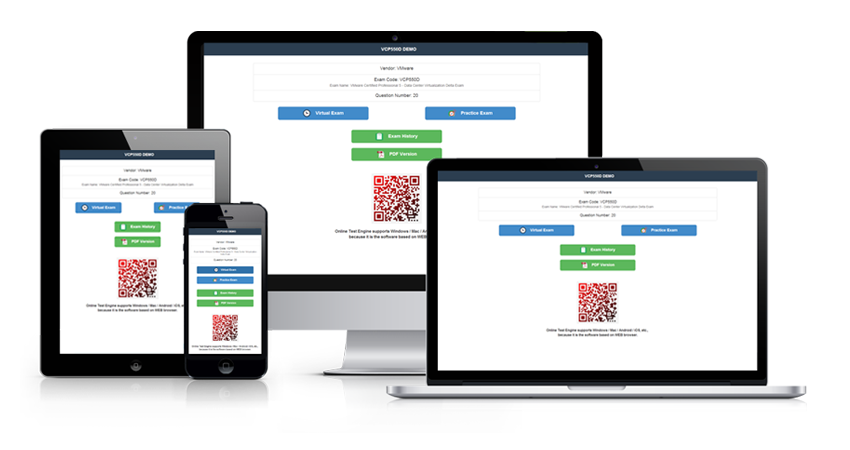
Free4Dump offers free demo of each product. You can check out the interface, question quality and usability of our practice exams before you decide to buy.
Our Clients








You will obtain the exam certification surely by practicing our most reliable Quiz Questions of Pass-Sure Materials and remember the key knowledge of our Sure-Pass Exam Learning Materials
Copyright © 2026 Free4Dump NETWORK CO.,LIMITED. All Rights Reserved. All trademarks used are properties of their respective owners. Privacy Policy